
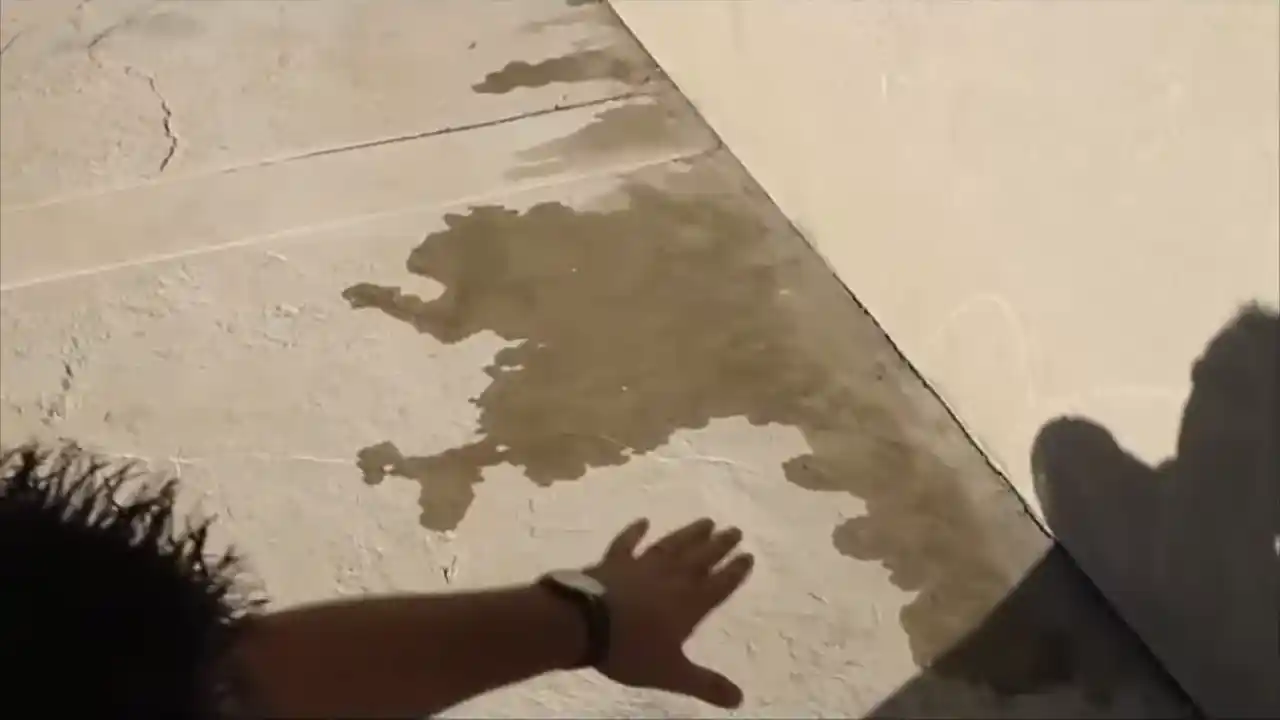
The first question homeowners ask when they suspect a slab leak is almost always the same: how much is this going to cost? The answer is not one number. It is a sequence of decisions, each with its own cost range, and the path you take depends on what the detection finds, what your pipe inventory looks like, and how long you plan to stay in the home.
Here is how the costs actually stack up in Loveland, what drives the numbers, and what the three-way repair decision really means.
Step One: Detection (What It Costs, Why It Matters)
The Loveland Front Range sits on heavy expansive bentonite clay that flexes with every wet-dry cycle. That movement stresses copper supply lines under slabs at fittings and at any point where the pipe bends or transitions material. It also means the wet spot on the floor may surface feet or even a room away from the actual failure point, because water travels through the clay before rising.
Professional detection uses acoustic listening equipment to hear the leak through the slab, thermal imaging to map surface temperature variations caused by escaping hot or cold water, and pressure isolation to confirm which line is failing. A proper slab leak locate produces a single marked spot, not a search zone.
Detection-only typically runs $150 to $600, depending on slab thickness, how many lines need to be pressure-isolated, and whether the leak is on a hot supply (easier to find via thermal) or a cold supply (requires acoustic at lower signature). A well-run detect takes two to four hours.
The Three Repair Paths and What Each Costs
Once the leak is located, three repair options exist. Which one is right depends on the pipe’s age, the severity of the failure, and whether the rest of the line inventory is worth preserving.
| Repair method | What it is | Typical range | Best when… |
|---|---|---|---|
| Spot repair (open slab) | Cut through concrete, fix the failed section, patch slab | $800–$2,500 | Single failure, pipe otherwise sound, newer home |
| Reroute (abandon + new line) | Cap leaking line, run new supply through walls or ceiling | $1,500–$4,000 | Pipe too corroded to repatch, avoid breaking more slab |
| Whole-system repipe | Replace all supply lines, copper or PEX above or through slab | $4,000–$12,000+ | Old corroded system, multiple leaks, planning to stay long-term |
Note: these ranges do not include flooring replacement (tile, hardwood, or carpet over the slab) or drywall repair if a reroute runs lines through walls. Add $500 to $3,000 for those if they apply.
The Insurance Documentation Window
A slab leak that has been running for an unknown period creates an insurance documentation problem. Most Loveland homeowner policies cover sudden, accidental water damage, which means the adjuster will ask when you first noticed symptoms and whether you had any prior indication of a problem. A months-old warm floor spot that was ignored becomes evidence of a slow leak rather than a sudden event, which can affect coverage.
The protection is a written professional locate report, obtained before any concrete is cut. The report documents the date of discovery, the leak location, and the finding that the failure was not a known condition. That document is the line between a covered water-damage claim and a denied one. Call (303) 552-3896 for a locate report before any repair begins if an insurance claim is possible.
What Loveland Bentonite Clay Does to the Numbers
The expansive clay under much of Loveland’s residential grid is the main variable that makes a spot repair a riskier choice here than in a stable-soil market. If the slab has flexed enough to fail one fitting, the same movement has stressed every other fitting in the same run. A spot repair on a clay-stressed slab is an accurate fix for today’s failure and a reasonable bet that the adjacent section holds.
A reroute removes that bet. By running a new line through an above-grade path and abandoning the buried section, the clay’s movement no longer touches the supply line. Most plumbers in Loveland recommend the reroute or repipe conversation honestly when the home is older than twenty-five years and the clay movement history is visible in foundation cracks or door-frame shifts.
The Insurance Question
Homeowner’s insurance typically covers water damage from a sudden, unexpected pipe failure, including the tear-out cost to access the leak (cutting concrete or opening walls). It does not cover the pipe repair itself, and it almost never covers damage from a slow seep that was present but unaddressed for weeks.
Documentation matters. A professional detect with written findings, before any concrete is cut, establishes that the leak was sudden and previously unknown. That documentation is the difference between a covered claim and a denied one in most Loveland-area policies. Do not cut concrete or begin any repair before you have a written locate report in hand if an insurance claim is possible.
Downtown Loveland and the Old-Slab Problem
The historic residential blocks of downtown Loveland carry some of the oldest residential slabs in the city. Homes built before the 1970s may have original copper or galvanized supply under concrete that has never been inspected. On these lots, the bentonite clay movement has had decades to work on the pipe, and a first-time slab leak in a fifty-year-old home is often the beginning of a pattern rather than a single event.
Homeowners in downtown Loveland facing a slab issue should ask specifically about the pipe material under the slab before deciding on a spot repair. Galvanized under a slab in a downtown home is at or past its useful service life, and a spot repair on galvanized that has been under clay-stressed concrete for fifty years is a short-term answer to a system-wide question. The honest path is a repipe plan that addresses the buried galvanized in stages, starting with the section that has already failed.
Call (303) 552-3896 for a professional locate on any downtown or historic Loveland slab home. The locate report includes a pipe-material assessment that shapes the repair-versus-replace conversation before any concrete is cut.
Recognizing Slab Leak Signs in a Loveland Home
The earliest slab leak indicators in a northern Colorado home are often subtle. A warm section of floor that is not near a heat register. A faint sound of running water when the house is quiet and nothing is on. A water bill that climbs slowly month over month without a change in household use. A soft or damp area in carpet or a musty smell from a section of floor.
By the time a wet spot appears on the surface, the leak has usually been running long enough to saturate the soil below the slab and begin affecting the concrete itself. Early detection means earlier, smaller, cheaper repair.
If you notice any of these signs, (303) 552-3896 starts a professional assessment. Loveland’s clay-rich soil is the reason a professional locate is worth the $150 to $600 cost before any other decision is made.