
A Loveland homeowner recently posted on r/Plumbing that their water bill climbed from 2,700 gallons to 34,400 gallons in a single month. The culprit was a fill valve in a rarely used half-bath, spraying water silently into the tank. The meter knew. The homeowner did not, until the bill arrived. That gap between what the meter knows and what the homeowner knows is where most leak damage quietly compounds.
Loveland Water and Power meters give you direct access to that information. The test takes five minutes. Here is how to run it, what the dial tells you, and what to do when it moves.
How the Five-Minute Meter Test Works
Turn off every water source in the house: faucets, showers, the dishwasher, the icemaker, the whole-house humidifier if you have one. If your irrigation controller is active, pause it. Do not flush the toilet during the test, and tell others in the house not to use any fixture.
Walk to the curb box in front of your home, lift the lid, and look at the meter dial. On analog meters, watch the small triangular or star-shaped leak indicator; on digital smart meters, note the current reading. Wait five full minutes without using any water. Check the dial again.
If the indicator has moved, water passed through the meter while nothing was on. That is the physical definition of a leak.
Now run a second test to split the location. Without changing anything inside, find the main shutoff valve between the meter and the house, usually near the water heater or in a utility closet. Close it. Walk back to the meter and check the dial again. If the indicator stops moving after you close the house shutoff, the leak is inside. If it keeps moving after the shutoff is closed, the leak is in the service line between the meter and the house, which is the homeowner’s responsibility to repair.
What Each Result Means
| Meter behavior | What it means | Next step |
|---|---|---|
| Indicator still after 5 min | No significant leak detected | Check quarterly; monitor bill |
| Indicator moves, stops when house shutoff closed | Leak is inside the home | Check toilets, fixtures, appliances |
| Indicator moves even after house shutoff closed | Leak in service line, meter to house | Call water-line leak detection |
| Indicator moves rapidly, large volume | Active pipe break or open fixture | Shut main valve; call immediately |
The Loveland Smart Meter Shortcut
If your home is on a newer smart meter, Loveland Water and Power’s customer portal shows hourly consumption. A bar chart that never drops to zero overnight, or a day with zero use followed by a sudden spike, is the same signal as a moving dial, without any tools. Loveland expanded smart meter coverage across most of the city; if you have the app, the usage graph is the first place to look before heading to the curb box.
What the Meter Test Cannot Tell You
The meter is the headline, not the story. It tells you water is leaving your system, but not where, what type of pipe, or how serious the failure is. These are the gaps:
A passing toilet will read on the meter, but so will an underground service-line failure that surfaces two lots away. A small pinhole weep may move the dial so slowly the five-minute window misses it even though thousands of gallons escape over months. And the meter cannot distinguish whether the water is entering a drain (low damage) or a wall cavity (high damage).
The test also cannot locate the leak. Once the meter confirms water is moving, finding where it goes requires either a fixture-by-fixture check for the easy ones, or instruments for hidden and underground failures.
Indoor Leak Checklist (Run This Before Calling)
If the meter test confirms an indoor leak, run through this sequence before scheduling a service call. Many homeowners find the cause in five minutes:
Toilets first. Drop a few drops of food coloring into the tank of each toilet. Do not flush. Wait fifteen minutes. If color appears in the bowl, the flapper is passing water. The EPA estimates a single passing toilet can waste around 200 gallons per day, which is consistent with the bill spikes homeowners report on r/Plumbing.
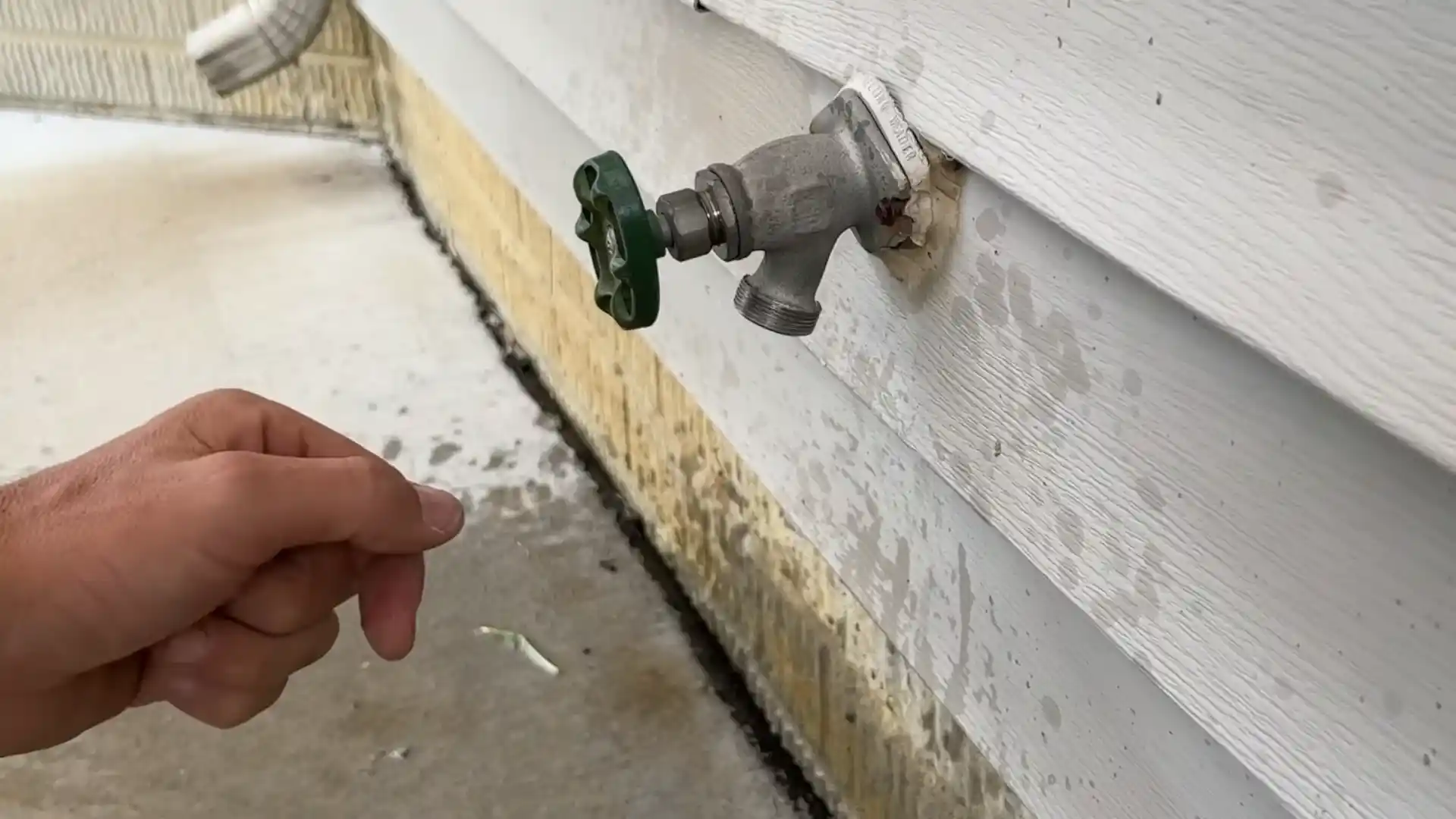
Faucets and hose bibs. Check every indoor faucet for a drip, including laundry sink and utility spigots. Walk outside and feel each hose bib, including any on walls that face north or west.
Appliance supply lines. Pull out the refrigerator and dishwasher and check the supply hoses at both ends. Feel behind the washing machine. An older rubber hose that has stiffened is a candidate for failure.
Water heater base. A ring of discoloration, rust, or mineral scale at the base of the tank usually means the tank is seeping at a fitting or at the pressure-relief valve drain.
If none of these show anything and the meter still moves, call (303) 552-3896. The leak is in a wall, a floor, a slab, or a buried line, and finding it requires instruments.
Smart Meters and the Loveland App
Loveland Water and Power has expanded its smart meter network across most of the city. If your home is on a smart meter, the LWP customer portal gives you hourly consumption data. A bar chart that never drops to zero overnight, or a usage bar on a day when no one was home, is the same signal as a spinning dial, without any tools. The usage history screen also shows consumption trends over months, which is how homeowners often first notice a creeping bill that points to a slow leak before any single read is dramatic.
Smart meter data does not replace a hands-on test for locating purposes. It confirms that water is being used. Finding where that water is going still requires the meter-at-the-curb isolation test and, if the leak is hidden, professional instruments. Call (303) 552-3896 to book a professional locate once the meter or app confirms flow you cannot account for. Think of the app as the early warning and the curb-box test as the confirmation.
What Happens When You Ignore a Moving Meter
The compounding effect of a small hidden leak is the part that surprises homeowners most. A seep that loses two gallons per hour loses 48 gallons per day, 1,440 per month, 17,280 per year. At Loveland Water and Power’s residential water rates, that is a real number on a real bill, and it does not include the damage to drywall, insulation, joists, and flooring that wet water creates quietly over the same period.
A professional leak locate performed as soon as the meter moves limits damage to what has already happened. Performed three months later, it finds what has already happened, plus everything the water did on its way to the surface.
When to Run This Test Routinely
The meter test is a quarterly habit worth building, especially in a home with older copper or galvanized supply lines, after any hard freeze or ground thaw, in spring after irrigation restarts, and any time the water bill seems high without an obvious reason. Loveland’s moderately hard surface water builds scale in pipes and at fittings over years, and a quarterly meter check is the cheapest early-warning system available.
If the dial moves and you cannot find the cause indoors, (303) 552-3896 starts a professional locate. The meter told you something is wrong; the instruments tell you exactly where.